Radical 一
3 strokes
乾 幹
one 一 (1) + ten 十 (4) = dry; work 干
干 gàn also means the trunk or main part of something. Gān and gàn were once two separate characters (which is why there are two traditional forms).
When 干 appears as part of another character, we will use the meaning “dry” in the equation and the story.
[干杯 (11) gān bēi Bottoms up! (on drinking a toast)]
[干吗 (45) gàn ma what (are you) doing?]

 Picture the unicorn standing on a white cross on the floor, which is his mark on the film set of “The Wizard of Oz” — they are filming in the emerald City. everything is ready but they must wait for dry weather. / Then the giant can erect the lighting gantry. The dwarf kicks the gantry poles angrily. \ “When are we going to get any work done?”
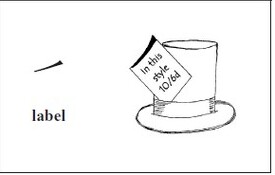

The “label” is always attached to a horizontal stroke, as in the following character. Compare this with “beret” (89a) which is a longer, more gently sloping stroke (usually attached to a vertical stroke), and “a drop” (22a) which is not attached to anything (unless sitting on top of something).


