Radical 阝
6 strokes
陽
mound 阝 (96a) + sun 日 (6) = in the open 阳
It’s best to read this and the next story together. Yin and yang (this character and the following one) are the two opposing forces in taoist philosophy. Yang is the force associated with being overt, in the sun, positive and masculine; and yin with things hidden or occult, cloudy, negative or feminine (insert here a comment of your choice about male chauvinism!). In the stories the fairy and the giant are getting in touch with their masculine and feminine sides, respectively.
太阳 (48) tàiyáng the sun; sunshine

When the sun shines, the creatures that live in the mound come out in to the open. / The fairy visits the mound in the day-time to develop her yang side.
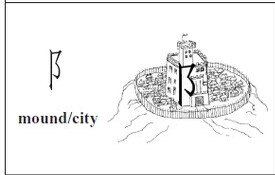

This is the only component whose meaning depends on where it appears in a character. When it’s on the left it means “mound”, but when it’s on the right it means “city”. examples of each follow in the next few characters. We realise that this is confusing but because everyone else observes this distinction, we will too. the situation arose because 阝 is an abbreviation of two completely different older characters, one which always appeared on the left and another which always appeared on the right. A similar situation applies to a few other characters, but modern Chinese doesn’t distinguish between them so you don’t have to worry about those!
Nowadays this fragment is regarded as being written with only two stokes, but traditionally it was classed as having three strokes.